
Where to Buy Cheap Survey Equipment in Nigeria: Why Price Shouldn't Be Your Only Consideration
Buying survey equipment is a serious investment. Whether you are a professional surveyor, construction company, engineering firm, real estate developer, or government agency, the equipment you choose can directly affect the quality, speed, and success of your work.
For many buyers, the first question is often:
“How much does it cost?”
Price is important, but it should not be the only thing you consider.
A GNSS RTK receiver, total station, level, drone, or other surveying instrument may look like a good deal because it has a lower purchase price. However, if the equipment is difficult to operate, lacks proper training, has no reliable technical support, or becomes difficult to repair when something goes wrong, the money you saved during purchase can quickly disappear.
The real cost of survey equipment is not just the amount you pay to buy it. It also includes training, technical support, maintenance, repairs, downtime, software compatibility, usability, and the ability to get help when you need it.
The Cheapest Survey Equipment May Not Be the Cheapest in the Long Run
Imagine that you purchase a GNSS RTK receiver because it is significantly cheaper than other options.
Everything works well initially.
Then, during an important project, you encounter a problem.
Perhaps the receiver cannot connect properly to a CORS network. Maybe the controller is showing an unfamiliar error. The software is difficult to configure. The equipment suddenly stops communicating with the correction service.
You contact the vendor.
There is no local technical team.
You send messages and wait.
Meanwhile, your field team cannot continue working.
Your client is waiting.
Your project deadline is approaching.
At this point, the money you saved by buying cheaper equipment may be much less money than the cost of the delay.
This is why the purchase price should be only one part of your decision when buying surveying equipment.
What Should You Consider Before Buying GNSS Survey Equipment?
If you are looking for a GNSS RTK receiver or other survey equipment, there are several important questions you should ask before making a purchase.
1. Is the Equipment Easy to Use?
Survey equipment should make your work easier, not unnecessarily complicated.
A GNSS receiver may have advanced specifications, but if the surveyor struggles to configure it, establish a connection, use the field software, or perform basic operations, the equipment may not deliver its full potential.
Before buying, ask:
Is the controller easy to operate?
Is the field software user-friendly?
Can a new user learn the basic operations quickly?
Is the interface clear?
Can the equipment be configured easily for RTK work?
Does it work properly with the CORS correction service you intend to use?
Good survey equipment should combine advanced technology with practical usability.
The goal is not simply to own equipment with impressive specifications. The goal is to have equipment that your team can confidently use in the field.
2. Can You Easily Reach the Vendor?
This is one of the most important factors that buyers often overlook.
Before purchasing survey equipment, ask yourself:
“If I have a problem tomorrow, who am I going to call?”
A good vendor should not disappear after receiving your payment.
You should be able to contact the supplier when you need:
Technical assistance
Equipment configuration
Software support
Troubleshooting
Maintenance information
Accessories
Spare parts
Training
Warranty support
This becomes particularly important when working with GNSS RTK equipment.
A GNSS receiver may need to be configured correctly for a CORS network, radio correction, internet correction, coordinate system, or field software. When something goes wrong, having someone who understands the equipment can save hours of frustration.
A survey equipment vendor should be a support partner, not just a seller.
3. Does the Vendor Provide Training?
Buying a GNSS receiver without knowing how to properly use it is like buying a sophisticated machine without learning how to operate it.
Even experienced surveyors may need training when they switch to a new equipment brand, controller, field software, or workflow.
Good training should help users understand:
How to set up the receiver
How to connect to correction services
How to configure RTK settings
How to use the field software
How to collect points
How to stake out points
How to manage coordinate systems
How to export survey data
How to troubleshoot common problems
Proper training can reduce mistakes and help your team become productive faster.
The value of survey equipment increases when the people using it know how to use it properly.
4. What Happens When the Equipment Develops a Fault?
Every electronic device can develop a problem eventually.
The important question is not whether equipment can fail.
The important question is:
What happens when it fails?
Before buying, find out what the vendor's after-sales support looks like.
Ask:
Is there a warranty?
Where are repairs carried out?
Are spare parts available?
Is there a technical support team?
How quickly does the vendor respond?
Can the vendor diagnose common problems remotely?
Is there local support?
What happens if the equipment needs to be returned?
A lower purchase price means little if a minor fault leaves your equipment unusable for weeks.
5. Check Compatibility With Your Existing Workflow
Survey equipment does not operate in isolation.
Your GNSS receiver may need to work with:
CORS networks
Field controllers
Survey software
CAD software
GIS software
Data collection platforms
Internet correction services
Other surveying instruments
Before buying, make sure the equipment fits into your existing workflow.
For GNSS RTK users, this is especially important.
A receiver may have excellent positioning specifications but still create problems if its communication, correction, software, or data-export options do not work properly with your existing setup.
Technology should fit your workflow, not force your workflow to fit the equipment.
6. Consider the Total Cost of Ownership
Do not look only at the purchase price.
Consider the total cost of ownership.
For example:
Purchase price + training + maintenance + repairs + accessories + software + downtime + support costs = real cost of ownership
Two GNSS receivers may have different prices at the point of purchase.
However, the cheaper receiver may eventually cost more if it requires expensive repairs, has poor technical support, causes frequent downtime, or requires additional components before you can use it effectively.
This is why a slightly higher initial investment can sometimes provide better value over several years.
7. Check the Availability of Spare Parts and Accessories
Before purchasing equipment, ask about the availability of important accessories and replacement parts.
Depending on the equipment, these may include:
Batteries
Chargers
Tribrachs
Controllers
Antennas
Data cables
Poles
Radio components
Carrying cases
Mounting accessories
If a simple accessory becomes difficult to replace, your equipment may become difficult to use.
A reliable supplier should be able to guide you on compatible accessories and replacement parts.
8. Do Not Be Impressed by Specifications Alone
Survey equipment manufacturers often advertise impressive specifications.
You may see claims about:
High positioning accuracy
Long operating hours
Advanced satellite tracking
Multiple communication options
Powerful processors
Large internal storage
Advanced IMU technology
These specifications are useful, but they do not tell the entire story.
The real question is:
How does the equipment perform in your actual working environment?
A GNSS receiver should be evaluated based on how well it performs in the conditions where you actually work.
Consider your typical projects, terrain, correction service, field software, network availability, and expected workload.
9. Look at the Vendor's Reputation
Before spending money on survey equipment, investigate the vendor.
Do they have existing customers?
Do they support the equipment they sell?
Can they demonstrate the equipment?
Do they provide training?
Do they respond to customers after sales?
Can existing users speak positively about their experience?
A vendor's reputation can tell you a lot about what happens after the transaction.
Remember:
You are not only buying equipment. You are also buying the support structure behind that equipment.
10. Ask for a Demonstration Before Buying
If possible, request a demonstration.
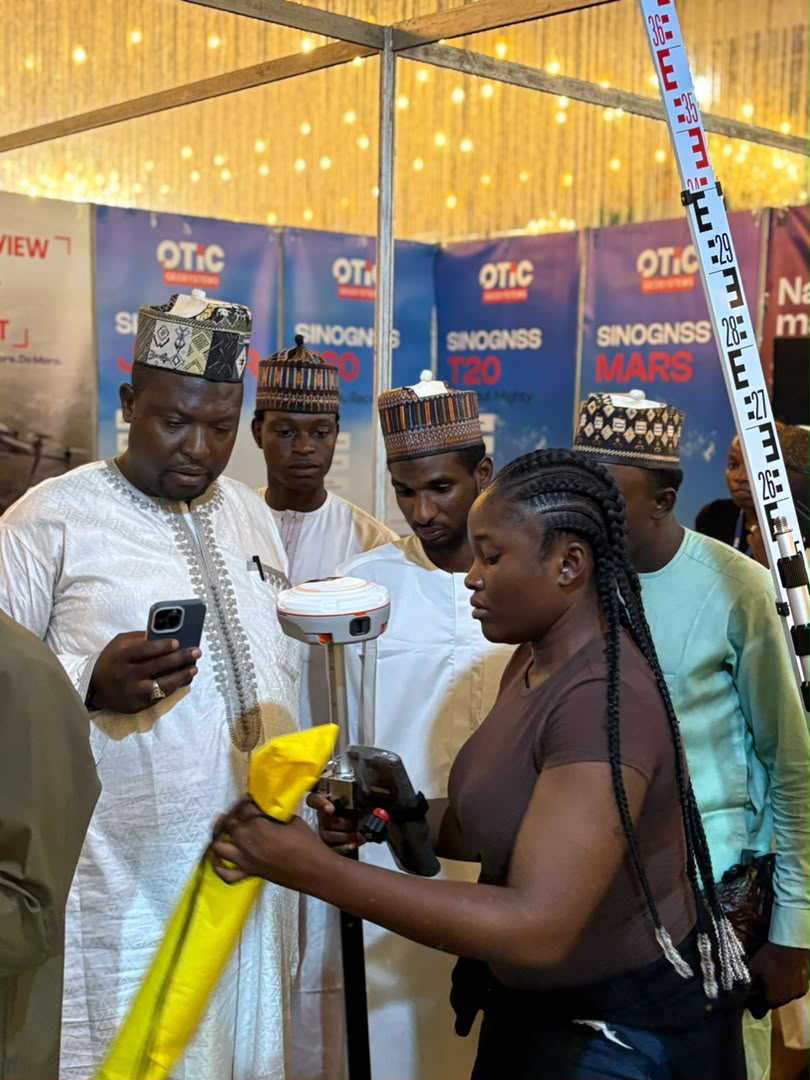
Seeing a GNSS receiver in operation can tell you things that a product brochure cannot.
During a demonstration, pay attention to:
How quickly the receiver starts working
How easy it is to configure
How the controller responds
How the field software works
How easily points can be collected
How stakeout is performed
How the receiver connects to correction services
How the equipment feels during field use
A demonstration can help you determine whether the equipment is actually suitable for your team.
Why After-Sales Support Matters in Surveying
Surveying is a field where time matters.
A survey team may be working on a construction site, road project, land development, cadastral survey, boundary survey, topographic survey, or engineering project.
If equipment stops working, the team may not simply be able to stop and continue another day.
There may be:
Workers waiting
Contractors waiting
Machines operating
Clients expecting results
Deadlines to meet
Transportation costs
Site mobilisation costs
This is why after-sales support is part of the value of survey equipment.
A vendor that answers your call, helps diagnose a problem, provides training, and supports your equipment can help protect your investment.
A Cheap GNSS Receiver Can Become an Expensive Decision
Consider two buyers.
Buyer A chooses a GNSS receiver mainly because it is cheaper.
The equipment works, but the buyer receives little training. When a technical issue occurs, support is difficult to obtain. The receiver remains unused while the surveyor looks for a solution.
Buyer B spends more on a GNSS receiver from a vendor that provides training, technical support, warranty assistance, maintenance guidance, and accessible customer service.
The second buyer may have paid more initially.
But if the equipment remains productive and the vendor is available when problems occur, the investment may provide better value over time.
This is the difference between buying based on price and buying based on value.
What Should You Look For in a Survey Equipment Vendor?
Before making your next purchase, use this simple checklist:
✔ Easy-to-use equipment
Choose equipment your team can learn and operate confidently.
✔ Reliable technical support
Make sure you can reach someone when you have a problem.
✔ Proper training
Choose a vendor that helps you understand the equipment.
✔ Warranty
Know what protection you receive after purchase.
✔ Spare parts and accessories
Confirm that important components can be obtained when needed.
✔ Software compatibility
Ensure the equipment works with your existing workflow.
✔ CORS and correction compatibility
For GNSS RTK equipment, confirm that it can work properly with your preferred correction service.
✔ Demonstration
Test the equipment before committing where possible.
✔ Vendor reputation
Look beyond the product and investigate the company selling it.
✔ After-sales service
Find out what support you will receive after payment.
The Right Question Is Not “How Cheap Is It?”
When buying survey equipment, change the question.
Instead of asking only:
“How much is this GNSS receiver?”
also ask:
“What am I getting for my money?”
Are you getting training?
Are you getting technical support?
Can you easily reach the vendor?
Is there warranty coverage?
Are spare parts available?
Will the equipment work with your CORS network and software?
Can the vendor help you when you encounter a problem?
These questions can help you make a better purchasing decision.
Choose Value Over Price
Survey equipment is a working tool, not simply a product sitting on a shelf.
Your GNSS receiver, total station, level, drone, or other surveying instrument should help you complete projects accurately, efficiently, and with fewer interruptions.
Price matters, but value matters more.
A cheaper survey instrument may save you money today, but reliable equipment, proper training, accessible technical support, and dependable after-sales service can save you much more over the life of the equipment.
Before buying your next GNSS RTK receiver or surveying instrument, look beyond the price tag.
Choose equipment you can use confidently, a vendor you can reach easily, and a support system that will still be there after the sale.
Because in surveying, the cheapest equipment is not always the equipment that costs you the least.