
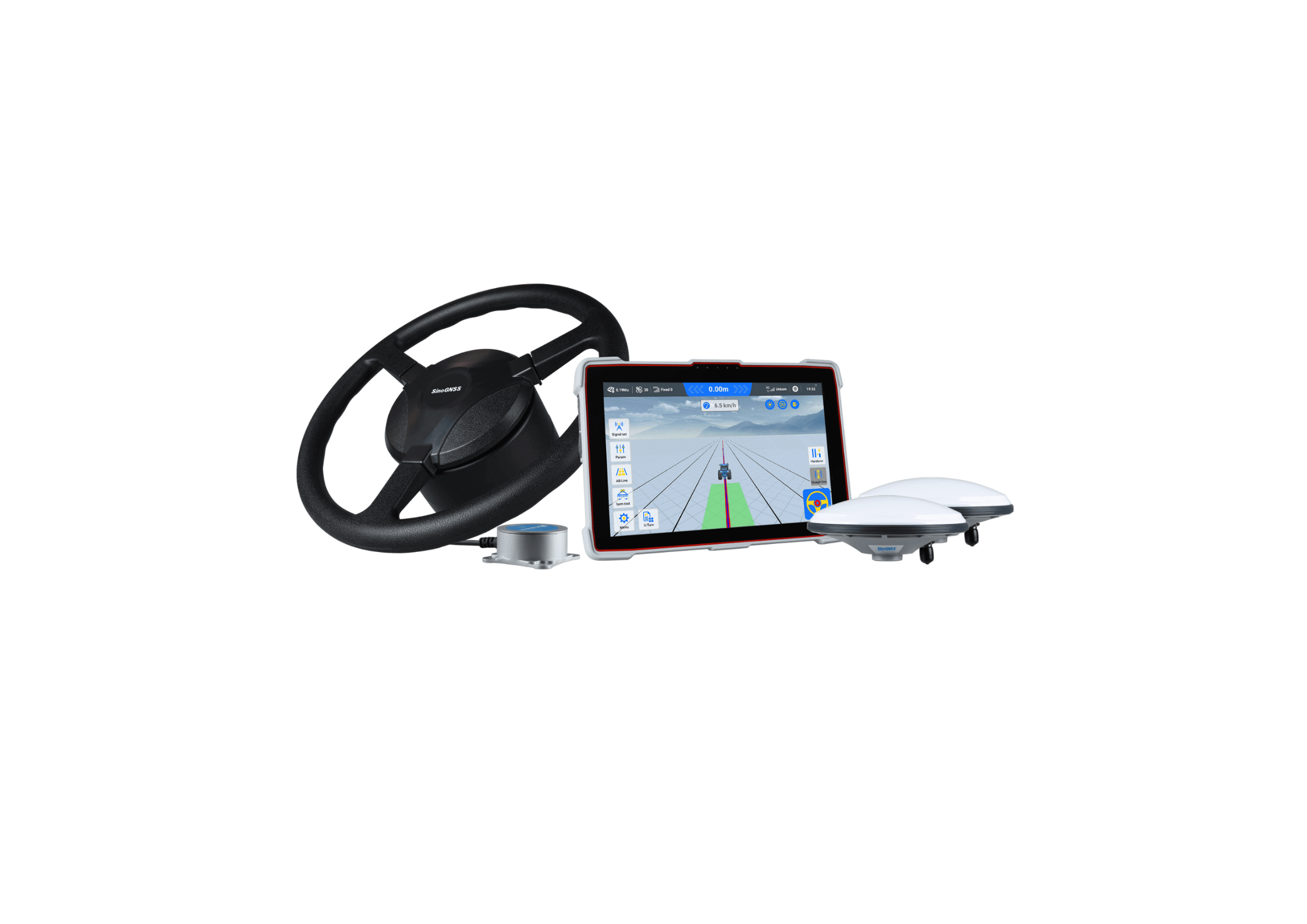
What is Auto Steering? How It’s Expanding Across Industries Auto steering, also called automated guidance, is changing how work gets done across multiple industries. What started in agriculture has now moved into construction, surveying, mining, and transportation. At its core, auto steering combines GPS and RTK positioning to guide machines along predefined paths with very little manual input. Instead of relying entirely on operator judgment, equipment follows a digital route, reducing errors and improving consistency. In real working conditions—dust, poor visibility, and long hours—this kind of control makes a noticeable difference. Let’s look at how different industries are putting it to use.
Agriculture: Getting More From Every Pass Farming was one of the first sectors to adopt auto steering, and the impact is easy to see. On large fields, small overlaps or missed sections can quickly add up to wasted inputs and uneven crop growth. With guided systems in place, tractors and sprayers follow exact lines across the field.
This allows operators to: Maintain consistent spacing during planting Reduce overlap when applying fertilizers or chemicals Work at night or in low visibility without losing alignment Cover more ground in less time For many farms, especially large-scale operations, this translates directly into lower input costs and more uniform crop results.
Surveying and Geomatics: Bringing Plans Closer to Reality In surveying, the challenge has always been translating digital designs into accurate field execution. Auto steering helps close that gap. When integrated with GNSS and RTK, survey teams can guide vehicles and equipment along mapped paths instead of relying solely on manual positioning. This becomes useful in:
Layout implementation on large sites Corridor mapping and data collection Land leveling and controlled traffic planning Repetitive survey operations where consistency matters For surveyors working in places with limited infrastructure or long field hours, reducing manual corrections can significantly improve productivity.
Construction and Earthworks: Reducing Rework on Site On construction sites, small mistakes often lead to costly rework. Auto steering helps reduce that risk by allowing machines to follow digital terrain models directly. Instead of depending heavily on stakes and repeated checks, operators can rely on guided systems to stay on track. Common uses include: Graders working to exact levels during road construction Bulldozers following cut-and-fill plans Excavators digging to specified depths without overcutting This leads to faster project completion and fewer corrections, especially on large or complex sites.
Mining: Safer and More Controlled Operations Mining environments are demanding, and safety is always a concern. Auto steering supports more controlled movement of equipment across these sites. It is commonly used for: Guiding haul trucks along fixed routes Positioning drill rigs accurately for blasting Managing movement in low-visibility or hazardous zones By reducing operator strain and improving route consistency, mining operations become more predictable and efficient.
Forestry: Working Through Difficult Terrain Forestry operations rarely happen on smooth, open land. Equipment has to navigate uneven ground, dense vegetation, and tight working spaces. Auto steering helps operators stay aligned even in these conditions. Applications include:
- Planting trees in consistent rows
- Navigating harvesting equipment with better control
- Reducing accidental damage to surrounding trees. This supports better resource management and improves long-term outcomes for forest operations.
Transportation and Logistics: Moving Toward Smarter Mobility Auto steering is already part of everyday driving, even if many people don’t think of it that way. Features like lane assist and adaptive cruise control rely on the same foundation.Companies like Tesla have pushed this further by integrating advanced guidance systems into their vehicles, allowing them to maintain lanes, adjust speed, and respond to road conditions with minimal input. Beyond personal vehicles, the technology is being used in: Long-haul trucking for route stability Fleet management systems using real-time positioning Delivery operations aiming for more predictable movement As these systems improve, transportation is gradually shifting toward more automated and efficient operations.
Defense and Military: Improving Operational Control In defense environments, reducing human exposure while maintaining control is critical. Auto steering plays a role in enabling that balance. It is used in: Unmanned ground vehicles for logistics and reconnaissance Convoy movement where spacing and alignment are important Navigation in challenging or unfamiliar terrain These systems allow operations to continue with greater consistency, even in high-risk areas.
Why Auto Steering Matters Now Across all these industries, the goal is similar: reduce guesswork and improve how work is executed on the ground. Instead of relying entirely on manual control, operators now have systems that support accuracy, repeatability, and efficiency. The result is fewer mistakes, better use of resources, and more predictable outcomes. In regions like Nigeria and across Africa, where working conditions can vary widely and infrastructure may not always support traditional methods, tools like auto steering are becoming increasingly valuable. They don’t replace skilled operators, they support them, making it easier to deliver consistent results regardless of conditions.