
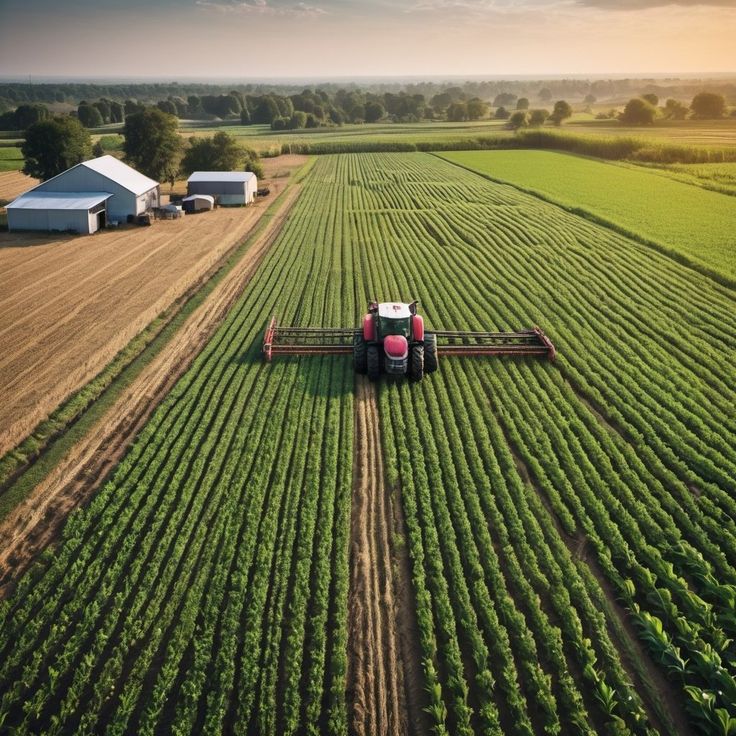
Nigeria is blessed with vast stretches of arable land, yet we continue to import a significant portion of the food we consume. In response, the government has rolled out ambitious programs like the National Agricultural Technology and Innovation Policy (NATIP), FMARD’s mechanization drive, and initiatives from NIRSAL and the Central Bank of Nigeria’s Anchor Borrowers’ Programme. These efforts are aimed at scaling up local food production through mechanized agriculture. But true agricultural transformation goes beyond simply putting more tractors in the fields, it requires smarter, technology-driven solutions. This is where autosteering technology becomes a critical upgrade. In recent years, both federal and state governments have made bold investments to modernize agriculture from expanding machinery fleets to training young Nigerians in mechanized farming. These steps mark a shift from subsistence practices to structured, commercial-scale food production. But here’s the big question: What if those tractors were equipped with autosteering systems?
Transforming Investments with Smart Technology
Let’s take a closer look at some major initiatives and imagine the amplified impact if autosteering were integrated. ₦28.4 Billion Federal Mechanization Boost In September 2024, the Federal Executive Council approved over ₦28 billion for procuring tractors and agricultural equipment through the National Centre for Agricultural Mechanization (NCAM). This investment is a cornerstone in Nigeria’s journey toward food security and agro-industrialization.
Taraba State’s 850-Tractor Breakthrough
Taraba State rolled out 850 tractors and trained 250 youths in operation and maintenance a massive step toward transforming agricultural output in the region.
Kwara State’s Agricultural Transformation Plan
Kwara State commissioned 15 tractors under its broader agenda for sustainable agricultural growth and job creation. Now imagine this: Every one of those tractors, equipped with autosteering.
Why Autosteering Matters
With autosteering systems installed, trained operators wouldn’t need to manually maintain straight lines across vast fields. Instead, they could focus on optimizing performance, monitoring crop health, and ensuring uniform application of inputs. Even in low visibility conditions like nighttime or dusty weather farming could continue with pinpoint accuracy. Autosteering uses GNSS-guided paths to control machinery movements, eliminating overlaps, reducing missed areas, and maximizing fuel efficiency. This can translate into thousands of liters of fuel saved annually and higher yields per hectare.
Smart Tractors for a Smarter Future
Nigeria is on the right track with large-scale mechanization. But the next leap is not just about getting more equipment it’s about getting smarter equipment. Autosteering doesn’t replace tractors; it enhances them. It doesn’t take away jobs; it empowers operators to do more with precision. For government agencies investing billions into agriculture, adding smart systems like autosteering ensures greater productivity, better land management, and stronger returns on investment. Imagine a future where every hectare farmed by a government program is mapped, optimized, and cultivated with GNSS precision, no waste, no guesswork. That’s not just a dream. That’s autosteering.
A Call to Action: It's Time to Embrace Autosteering
Globally, countries with advanced agricultural systems are already embracing smart farming tools. For instance, Brazil, known for its large-scale agricultural operations, has shown strong interest in autosteering systems like ComNav’s AG502, which was prominently showcased at Agrishow 2024 one of the world’s largest agricultural exhibitions. If such innovations are gaining ground elsewhere, there’s no reason Nigeria should be left behind. We call on the Federal Ministry of Agriculture and Food Security, National Centre for Agricultural Mechanization (NCAM), NIRSAL, CBN’s Anchor Borrowers’ Programme, state ministries of agriculture, and all allied agencies to leap into the future with autosteering technology. The equipment exists. The benefits from increased yields to optimized resource use are undeniable. Let’s ensure every tractor investment delivers maximum impact. Let’s empower operators with smarter tools. Let’s push the boundaries of what mechanized agriculture in Nigeria can achieve. The future of farming is not just mechanized it’s intelligent. It’s guided. It’s autosteered. Nigeria’s food future depends on more than machines. It needs Autosteering.