
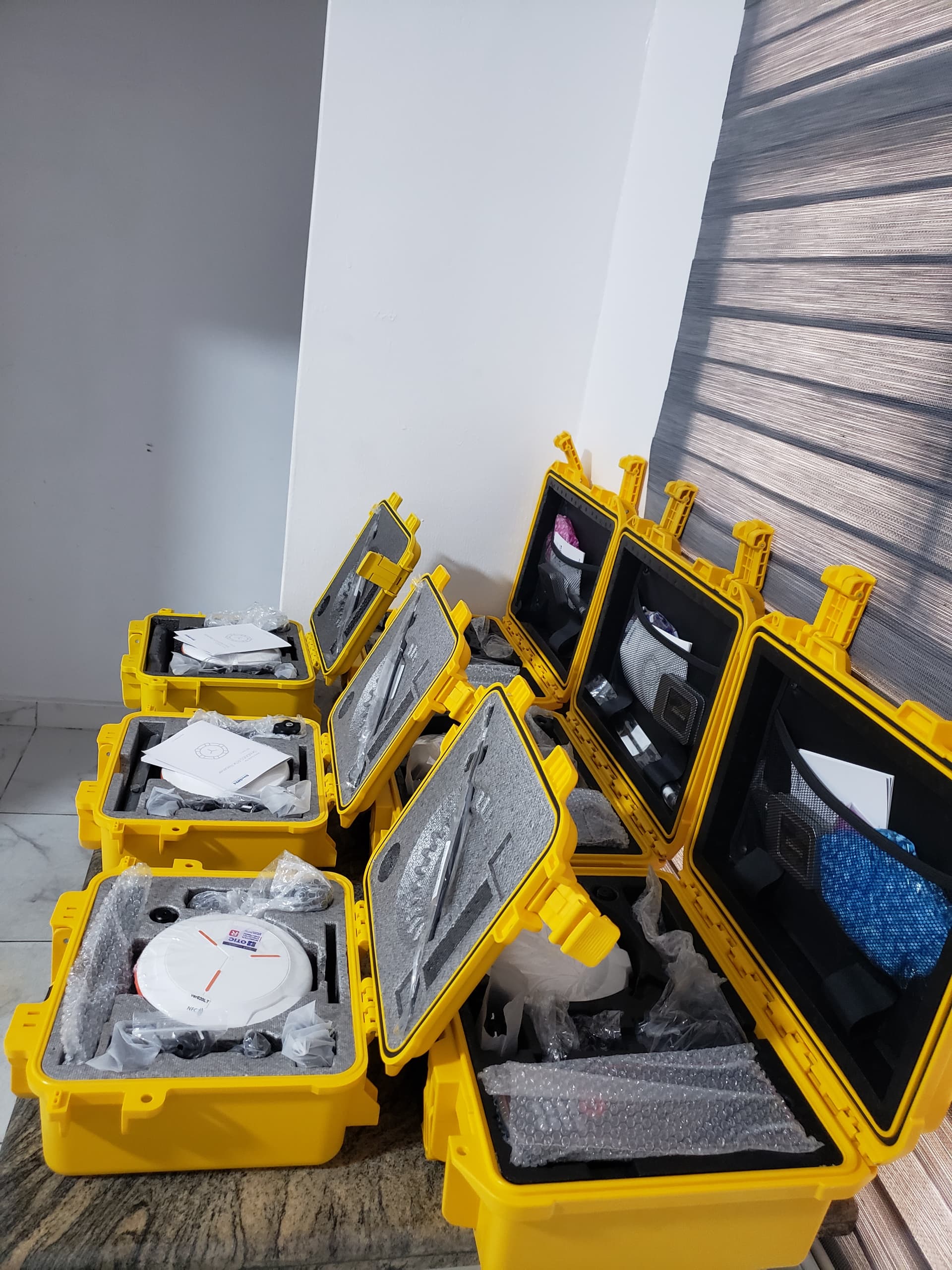
GNSS receiver prices in Nigeria are one of the first things surveyors consider when planning to buy equipment, and it is completely natural to compare prices before buying because surveying equipment is a major investment, and nobody wants to spend more than necessary.
But have you ever wondered why two GNSS receivers that can do the same job, like cadastral surveying, cost different amounts?
The truth is, two receivers may look similar and perform similar basic functions, but they may not offer the same features, specifications, or operating options. These differences can affect their prices and how useful the equipment will be to you in the long run.
The goal is not to buy the most expensive receiver. It is to buy one that meets your needs, fits your budget, and will serve you well.
How Much Then Does a GNSS Receiver Cost in Nigeria?
GNSS receiver prices in Nigeria run into millions of naira, with some models starting from around ₦1.5 million to even over 10 million naira and above, depending on the brand, specifications, capabilities, and what comes with it; this is where comparing specifications becomes important when looking at the price of a GNSS.
You may also come across a receiver that costs less than another and wonder why you should pay more when both can be used for surveying. Well, before making that decision, it is important to understand what you are getting for the price.
Why Do GNSS Receiver Prices Differ?
Now, let us look at why one GNSS receiver may cost more than another. Before you conclude that a vendor is selling one too expensively, there are a few things you need to compare.
1. How you can use the receiver/What type of Receiver
This is one thing many buyers overlook. Some GNSS receivers can work with both a CORS network and a base receiver, while others are designed to work with a CORS network only.
For instance, some of the lower-priced receivers on the market are network rovers. This means they receive corrections from a compatible CORS station instead of using their own base receiver.
Don’t get me wrong, there is nothing wrong with buying a network rover. It can save you money, especially if you have reliable CORS coverage in the areas where you work.
But think about your future needs. You may buy a network rover today because it is more affordable. A few years later, you may decide to buy a base receiver and operate your own base-and-rover setup. If your existing rover is not compatible with that setup, you may have to buy another rover set before you can get a base set.
That is why you need to understand what the receiver can and cannot do before buying. If you only need CORS-based surveying, a network rover may be all you need. But if you want the option of using your own base receiver in the future, make sure you buy a model that supports both options.
At OTIC Geosystems, we operate COR stations across multiple states in Nigeria. If you are considering a network rover, we can help you check coverage in your working areas and choose a suitable receiver for your workflows. Contact us via WhatsApp to enquire about available options.
2. The satellite signals it supports
Not all receivers track the same satellite signals. Some support more constellations and signals than others. This can affect how they perform in different working environments, especially where satellite visibility is limited.
3. The accuracy specifications
Two receivers may both be advertised for high-precision surveying, but that does not automatically mean their specifications are the same. Ask for the manufacturer's datasheet and compare the stated static and RTK accuracy.
Remember that actual field results also depend on factors such as satellite visibility, correction quality, and setup.
4. The features that come with it
Features such as tilt compensation, internal radio, and different communication options can also affect the price.
But do you need all these features for your work? That is the question you should ask before paying more.
5. Warranty and technical support
What happens when your equipment develops a fault? Where will you take it for repairs? Will you get technical support or training after purchase?
These are important questions because buying the receiver is only the beginning. You also want to know that help is available when you need it.
So, when comparing two GNSS receivers, do not look at the price alone. Check what each one offers and decide whether the difference is worth paying for.
What Should You Ask Before Buying a GNSS Receiver?
Before making payment, take a moment to ask your vendor these questions:
Is it a network rover, or can it also work with a compatible base receiver?
Which CORS networks and correction methods does it support?
What accuracy specifications and features does it offer?
What warranty, training, and technical support will I receive?
These questions may seem simple, but they can help you avoid buying equipment that does not suit your needs.
Before You Buy, Make Sure You Understand What You Are Paying For
At the end of the day, there is nothing wrong with looking for a good price. We all want to get value for our money. But when it comes to GNSS equipment, the cheapest option may not always be the most suitable, just as the most expensive option may not always be necessary.
Take your time, compare the specifications, and think about the kind of work you may want to do in the future.
If you are looking for a GNSS receiver in Nigeria and are unsure which option is right for you, contact OTIC Geosystems via WhatsApp. We can help you explore available options, understand their capabilities, and check CORS coverage for your working areas before you make a decision.
Ready to own your surveying equipment?
Or need more information about our flexible payment plans?
📞 Call/WhatsApp Constance: +234 706 176 9934.