
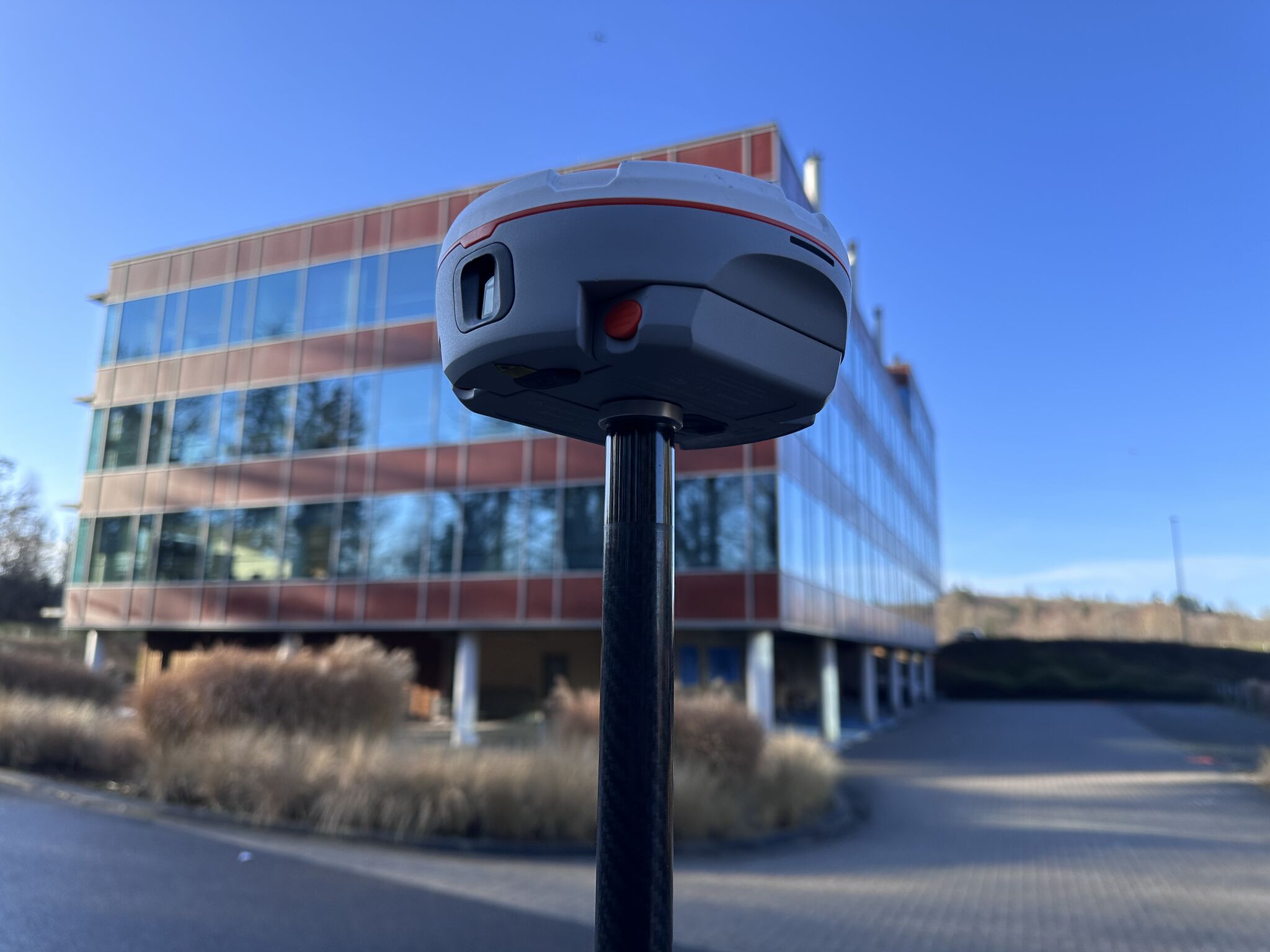
With the development of global satellite navigation systems, RTK technology has steadily evolved. Systems like GPS, GLONASS, Galileo, and BeiDou have introduced multi-frequency signals, enabling higher accuracy positioning, better resilience, and broader applicability in various environments.
Understanding GNSS Bands and Constellations
GNSS (Global Navigation Satellite Systems) use multiple frequency bands to transmit positioning data. These include: L1 (~1575 MHz): Standard civilian signal L2 (~1227 MHz): Used for higher-accuracy applications like RTK L5 (~1176 MHz): High precision and resilient signal BeiDou Bands: B1, B2, B3 Galileo Bands: E1, E5a, E5b GLONASS Bands: G1, G2, G3 The more bands a receiver supports, the better its performance in urban canyons, forests, or environments with heavy signal interference. What Do “Single”, “Dual”, and “Triple” Frequency Mean?** Let’s break it down:
Single-Band GNSS Receivers: Simple and Budget-Friendly
- Supported Bands: L1, E1, or B1
- Use Cases: GIS data collection, basic mapping, training
- Pros: Affordable, lightweight, user-friendly
- Cons: Accuracy limited to 1–3 meters, slow fix, poor performance in obstructed areas
Dual-Band GNSS Receivers: Reliable for Professional Work
- Supported Bands: L1 + L2, B1 + B2, G1 + G2, E1 + E5a
- Use Cases: Surveying, drone GCPs, site layout, agriculture
- Pros: Centimeter-level accuracy, faster fixes, better resilience
- Cons: Requires correction services, higher cost
Triple-Band GNSS Receivers: Built for High-Stakes Projects
- Supported Bands: L1 + L2 + L5, B1 + B2 + B3, and other advanced combos
- Use Cases: Scientific surveys, offshore work, CORS stations, deformation monitoring
- Pros: Up to millimeter-level accuracy, ultra-fast convergence, best performance in harsh environments Cons: More expensive, requires more advanced configuration
Final Guide for Choosing: Single-Band: Not ideal, but budget friendly Dual-Band: Ideal for surveyors, engineers, and drone operators needing precision Triple-Band: Best choice for CORS, deformation studies, geodesy, and challenging environments Message OTIC Geosystems on WhatsApp [https://wa.me/2349048332623](https://wa.me/2349048332623) Explore our GNSS receivers: [https://oticgs.com]