Calibration of Equipment in Lagos
 Precious Lenyie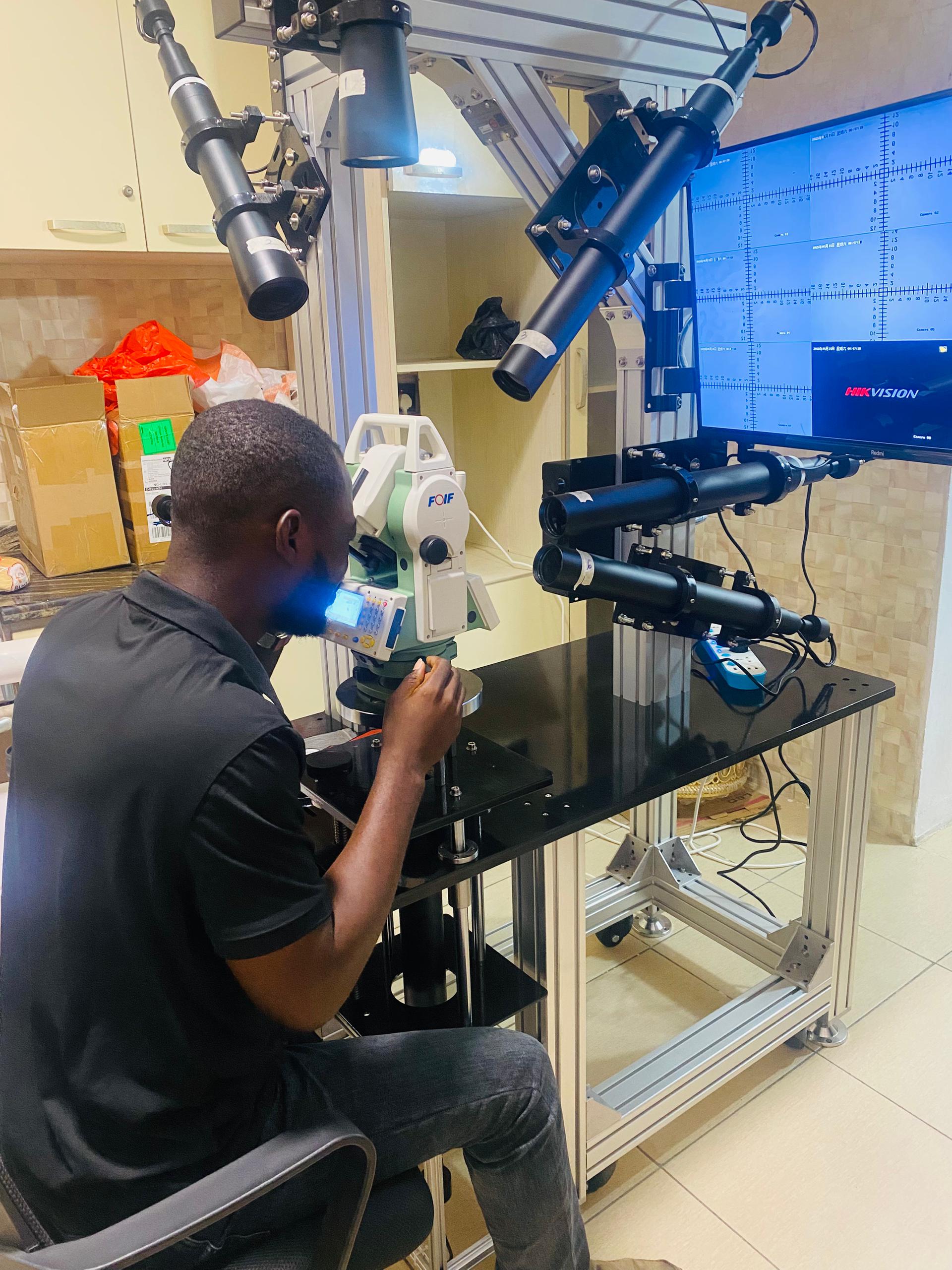
Calibration is often the quiet hero behind every reliable measurement in surveying, engineering, and countless other industries. In Nigeria, with Lagos as a bustling technological hub professional calibration centres play a pivotal role in upholding the highest standards of accuracy and safety for every sector that depends on precise equipment.
**What Is Calibration?**
Calibration is the process of comparing your instrument’s measurements with a known standard and making adjustments to correct any deviations. This ensures your total station, GNSS receiver, digital level, or laser scanner is measuring exactly what it should.
**Why Is Calibration So Important?**
Every instrument, no matter how advanced or durable, is subject to wear and drift over time. Factors like environment, handling, frequency of use, and even transportation can cause measurement errors to creep in. Regular calibration ensures that your tools remain dependable, align with accepted standards, and maintain compliance with industry regulations. For businesses, this means:
1\. Ensures Measurement Accuracy
Uncalibrated instruments can drift over time due to transport, temperature changes, wear, and environmental exposure. Calibration brings them back to standard.
2\. Reduces Costly Errors
Survey errors caused by faulty instruments can result in rework, boundary disputes, construction delays, or even legal liabilities.
3\. Builds Professional Credibility
Clients and contractors trust professionals who work with regularly calibrated equipment. It signals quality, responsibility, and attention to detail.
4\. Meets Project and Regulatory Standards
Many government and engineering projects require proof of equipment calibration as part of compliance or contract specifications.
**How Often Should You Calibrate?**
There’s no single answer, It depends on your equipment type, manufacturer’s recommendations, usage frequency, the working environment, and legal or industry requirements. Common calibration intervals include:
Annually: Standard for most surveying instruments.
Bi-annually, Quarterly, or Monthly: For equipment exposed to high wear or critical safety applications.
After Repairs or Major Shock: Calibration must be repeated after significant maintenance or if the equipment has been dropped or mishandled.
It’s wise to keep a detailed calibration schedule and log for each piece of equipment. Not only does this make audits easier, it reduces risk and often extends equipment life. Neglecting calibration leads quickly to unreliable data, which can spark project failures, safety incidents, and loss of certification or customer trust. In competitive and regulated industries, proper calibration isn’t just a box to check, it’s the backbone of your credibility and success.
**What We Calibrate at OTIC Geosystems**
Our accredited laboratory in Lagos is outfitted to handle an impressive range of instruments, including:
Total stations
Theodolites and levels
Our team of trained specialists uses traceable reference standards, with regular proficiency testing to ensure your equipment is up to international benchmarks.
**We’re Here for You**
Ready to schedule your next calibration or set up a personalised plan? Get in touch with the Geossotech team today. Let’s safeguard the tools you rely on, together and keep Nigeria’s brightest businesses operating at their best.
Message OTIC Geosystems on WhatsApp [https://wa.me/2349048332623](https://wa.me/2349048332623)
Explore our GNSS receivers: [https://geossotech.com/new-equipment/](https://geossotech.com/new-equipment/)